Seasons, weather and time of day
In many games, the calendar and the sky decide what you can catch and grow. This explainer covers the common patterns and how to plan around them.
Why games use time-based conditions
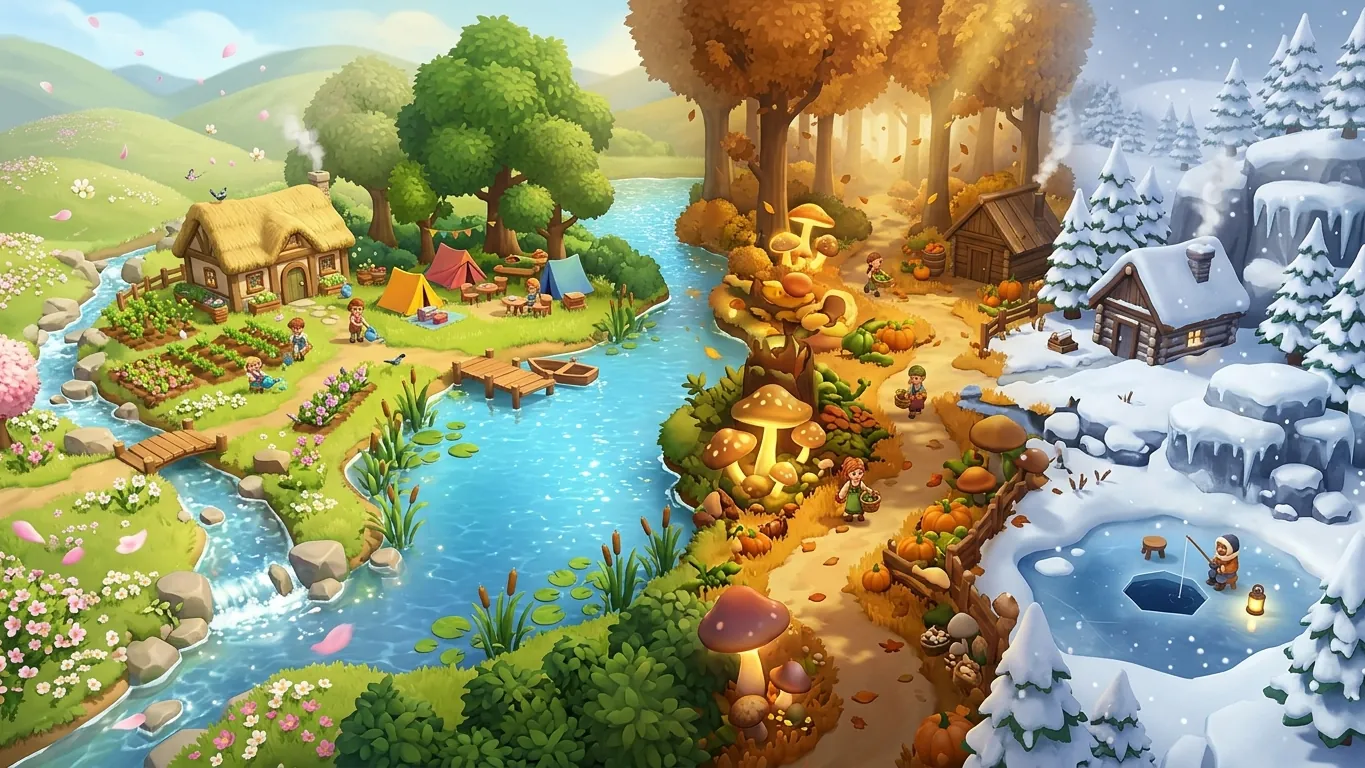
Seasons, weather and time of day give a game world a sense of rhythm. They also create variety: if every fish and mushroom were always available, there would be little reason to explore at different times. By tying certain species to specific conditions, designers encourage players to return to familiar places and notice how they change.
These systems differ from game to game. Some use detailed calendars with dozens of conditions, others only distinguish day from night. The patterns below are common, but always check your own game's in-game guides or logs for exact rules.
Seasons and fish
Seasonal fish lists are among the most common features. A species might appear only in spring or only in winter, encouraging you to fish throughout the year. In games with winter, frozen lakes sometimes introduce ice fishing with its own small variations on the usual minigame.
When a new season begins, it is a good moment to check your fish log and see which species you have not caught yet. If your game marks some fish as appearing in several seasons, those are less urgent. Fish that appear in only one season are worth prioritizing before it ends.
Seasons and mushrooms
Mushrooms often lean toward autumn in game design, echoing the familiar image of a forest floor after rain. Wild mushrooms may spawn more frequently in that season, and some cultivated varieties might only grow then. Other games reverse this and offer spring varieties, or keep indoor mushrooms growing all year as a reliable option when outdoor crops are dormant.
If your game includes indoor or cave mushroom farming, it is often the steady option during winter. Outdoor logs, by contrast, may pause or produce different types depending on the season.
Weather effects
Rain is the weather condition games use most. Rainy days frequently bring out particular fish and may also water outdoor crops and mushroom logs automatically, saving you time. Storms can unlock rarer catches in some games, while fog or wind might change which species appear or how the minigame feels.
In games with a weather forecast, checking it the evening before can help you plan. A rainy day might be ideal for a long fishing trip, while a sunny day is a good time for building or tending fields.
Time of day
Day and night cycles create another layer. Some fish appear only in the morning, others only at night. Mushrooms in some games glow or grow faster in darkness, which can make night visits to caves especially atmospheric.
Tracking time-based conditions is easier with a simple habit: when you catch something new, note the time, weather and season. Many in-game logs do this for you. Over time you will build a personal map of when and where things appear.
Planning without pressure
Seasonal systems can create a sense of urgency, but most games cycle through the calendar again. If you miss a fish this year, it will usually return next season. Treat the calendar as a guide for variety rather than a deadline, and enjoy how each season changes the familiar places you visit.
Related articles
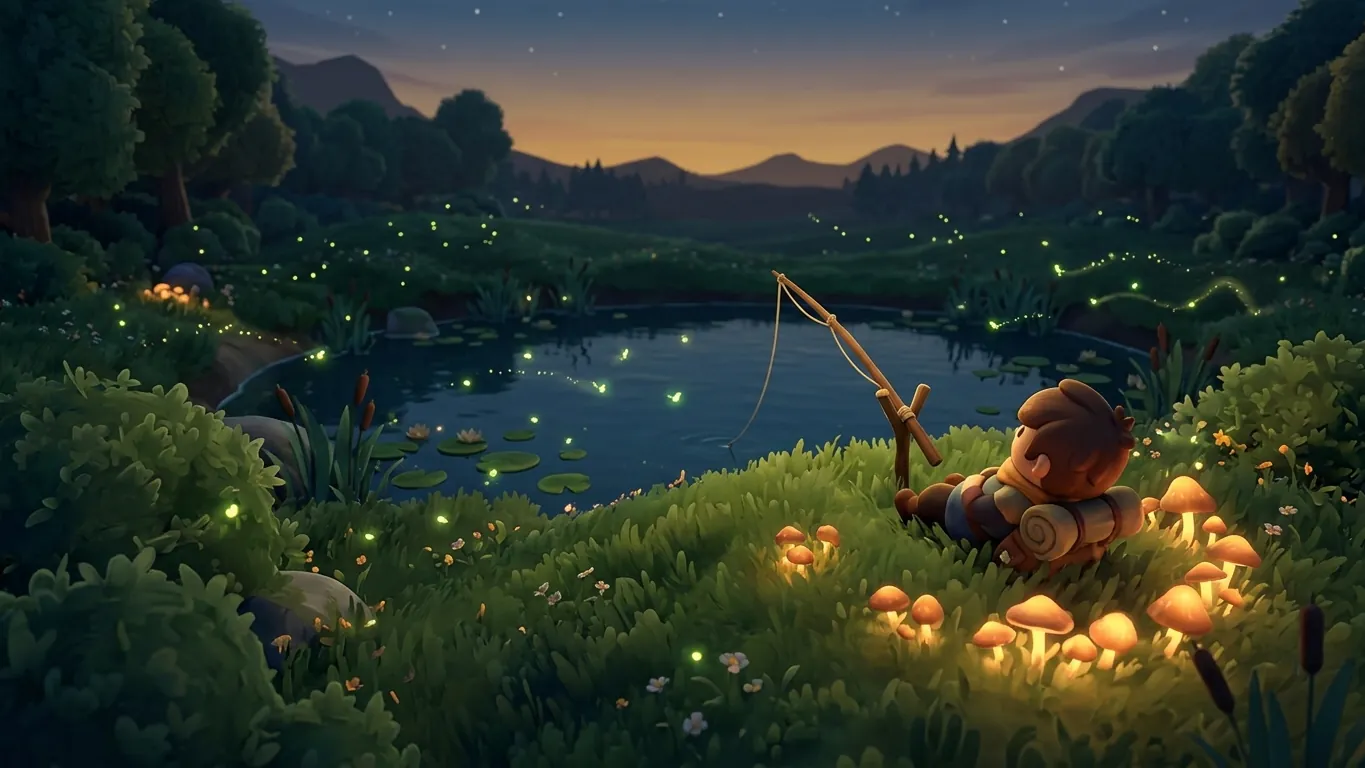 Why these quiet loops feel so good
An opinion piece on why slow game activities like fishing and mushroom farming feel calming, and which design choices make these loops enjoyable.
Read more
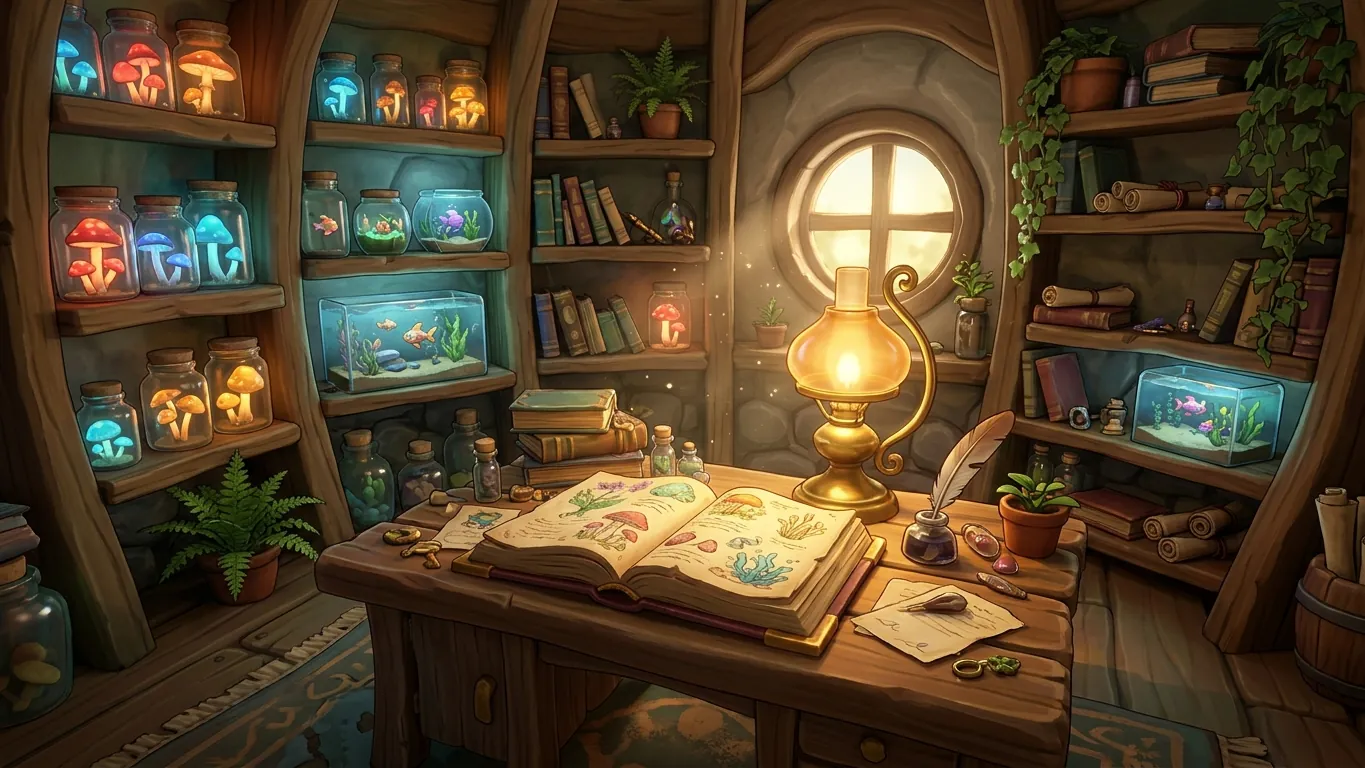 Completing fish and mushroom collections
Tips for tracking fish logs and mushroom collections in video games, finding missing entries and enjoying completion goals without stress.
Read more
What to look for in a fishing and farming game
A guide to evaluating games that include fishing and mushroom farming: minigame style, depth of systems, pacing, accessibility and overall mood.
Read more