Designing a mushroom grow room
A well planned grow room or cave makes mushroom farming quick and pleasant. This guide covers layout ideas that work in many farming and survival games.
Start with the rules of your game
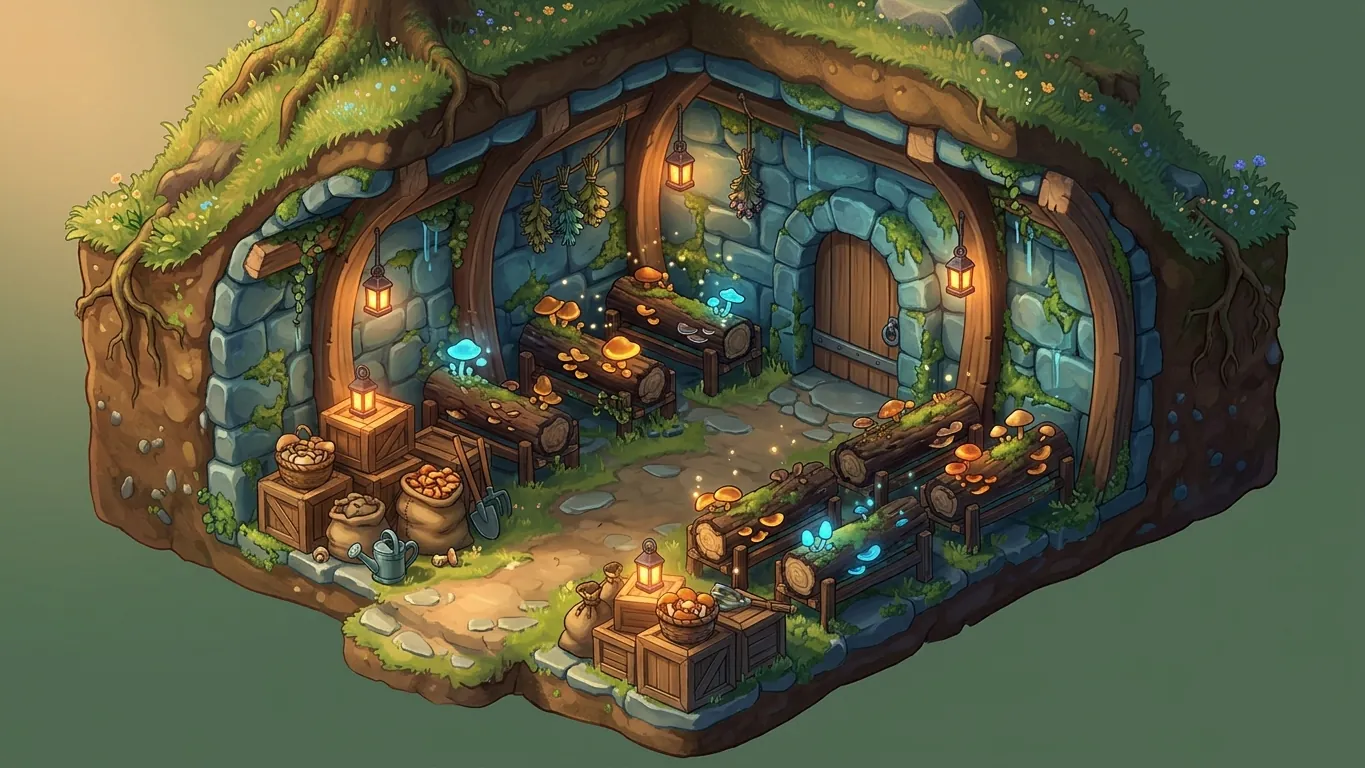
Before arranging anything, find out what your game requires. Does the grow area need to be indoors, in a cave or simply in shade? Do logs or beds need watering? Is there a limit on how many units fit in a building or a single tile? These rules decide how flexible your layout can be.
It also helps to know how harvesting works. Some games require you to stand next to each log, others let you collect several at once with a tool. If harvesting is one unit at a time, walking distance becomes the main factor in how long your routine takes, and a compact layout pays off quickly.
Layout ideas that save time
A popular approach is the corridor layout: two rows of logs or beds facing a single central path. You walk down the middle once and reach every unit. In grid-based games, leaving a one-tile path between double rows keeps everything within reach while using space efficiently.
Another option is the ring layout, where units surround a central point such as a storage chest or crafting table. This works well when your game lets you harvest from a distance. In caves with irregular shapes, follow the natural walls and leave the center open for movement. Whatever you choose, avoid dead ends that force you to walk back past units you have already harvested.
A simple planning process
Use these steps to build a grow room you will not need to tear down later.
- 01
Measure the space
Count the usable tiles or area and note doors, walls and any spots where units cannot be placed.
- 02
Sketch a route
Draw a quick path on paper or in your head that passes every unit once and ends near the exit.
- 03
Place storage wisely
Put a chest near the entrance so you can drop off the harvest without crossing the whole room.
- 04
Build in stages
Fill one section first, confirm everything grows, then extend the same pattern.
- 05
Leave room for decor
Reserve a few spots for lights or decorations so the space stays pleasant to visit daily.
Mixing varieties and materials
If your game offers several mushroom types or log materials, grouping them helps. Keep each variety in its own row or section so you always know what you are harvesting and can replace units without confusion. Some players dedicate one section to common mushrooms for steady cooking supplies and another to rarer types for gifts or collections.
When logs or beds wear out after a number of cycles, a grouped layout also makes replacement easier. You can refresh an entire row at once and keep production consistent. If your game shows the growth stage visually, uniform rows let you spot which section is ready at a glance.
Making it a place you enjoy
Efficiency matters, but you will visit this room often, so atmosphere counts too. Warm lights, a small bench, a few plants that tolerate shade or a rug along the walkway can turn a functional cellar into one of your favorite spots. Many cozy games reward this kind of personal touch simply by making daily chores feel nicer.
Finally, revisit your design after a few in-game weeks. You will notice where you hesitate, which corners you skip and what feels slow. Small adjustments based on your own habits usually work better than copying any single layout exactly.
Related articles
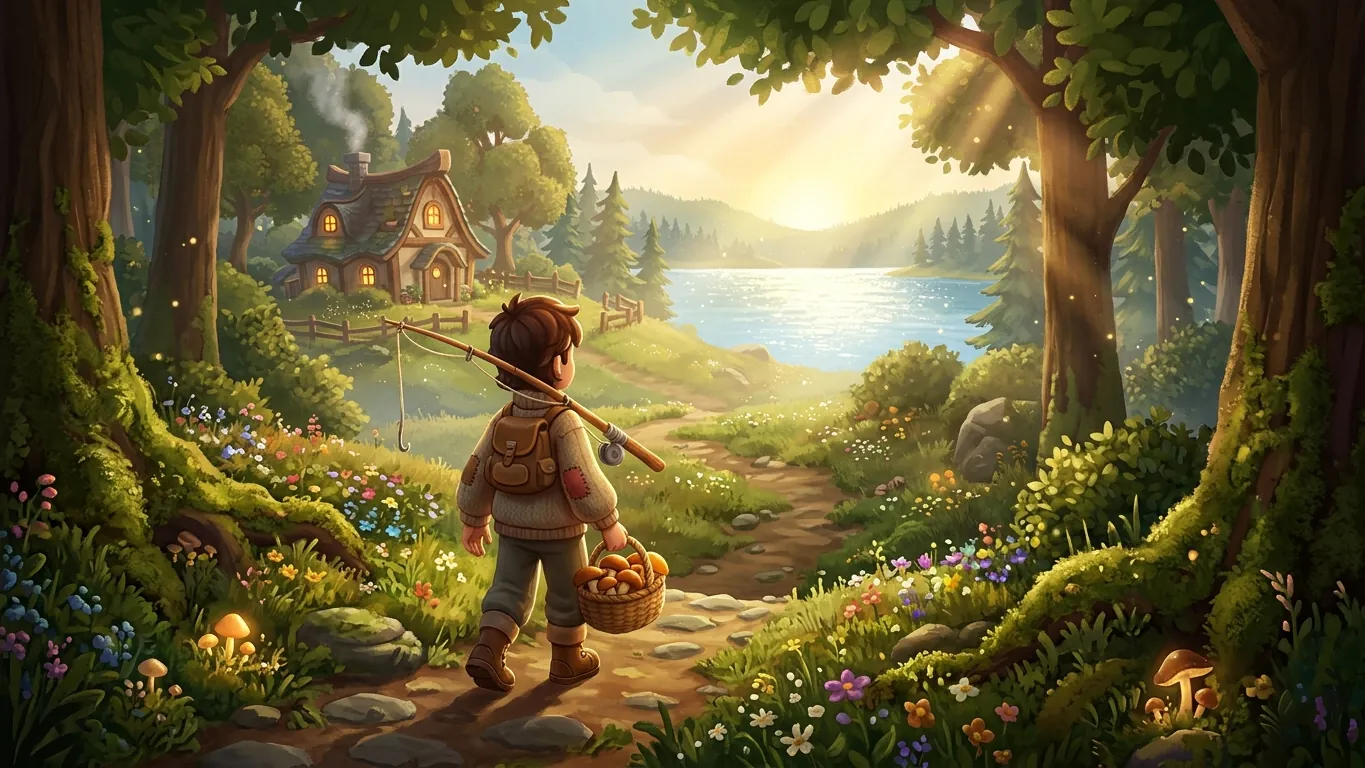 Balancing fishing and mushroom farming
How to fit fishing trips and mushroom harvests into one smooth in-game day, with routine ideas, cooking combinations and tips for avoiding burnout.
Read more
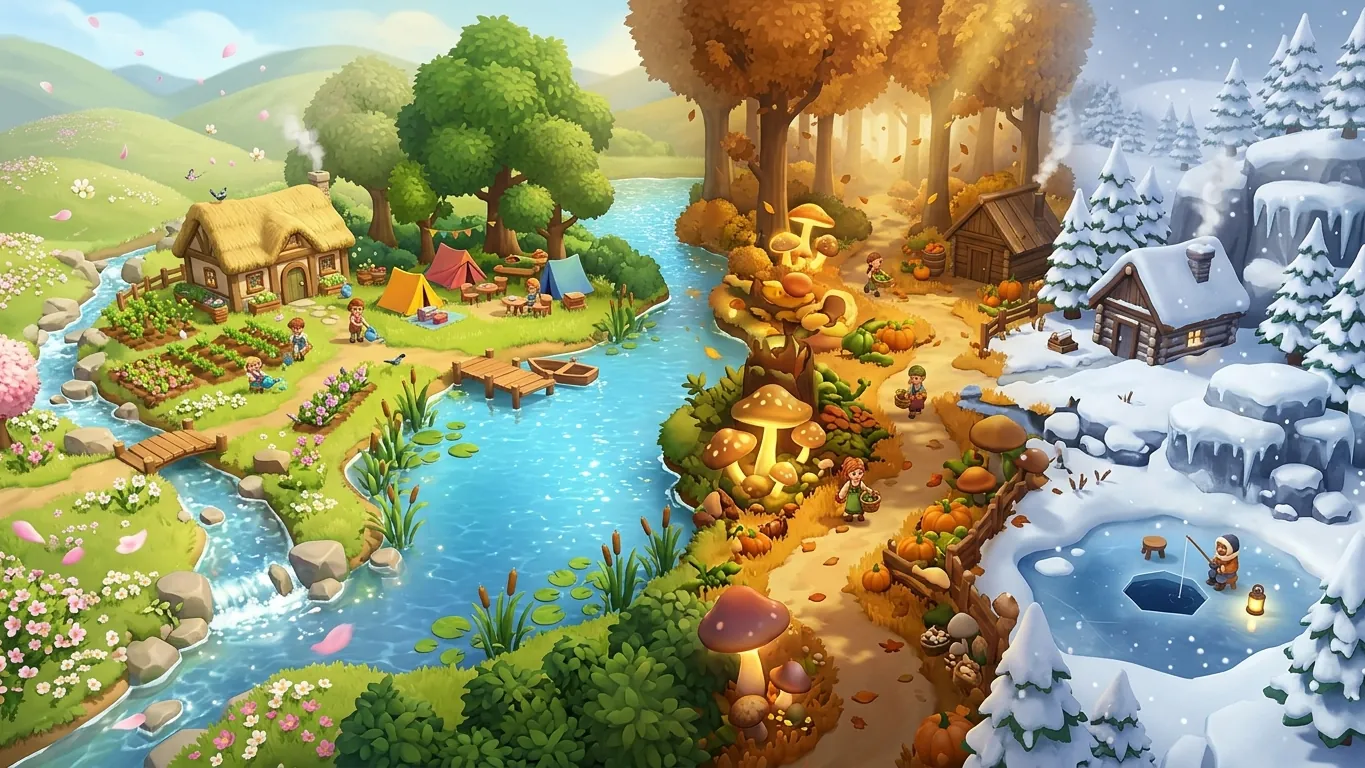 Seasons, weather and time of day
An explainer on how in-game seasons, weather and time of day commonly affect which fish appear and how mushrooms grow in farming and adventure games.
Read more
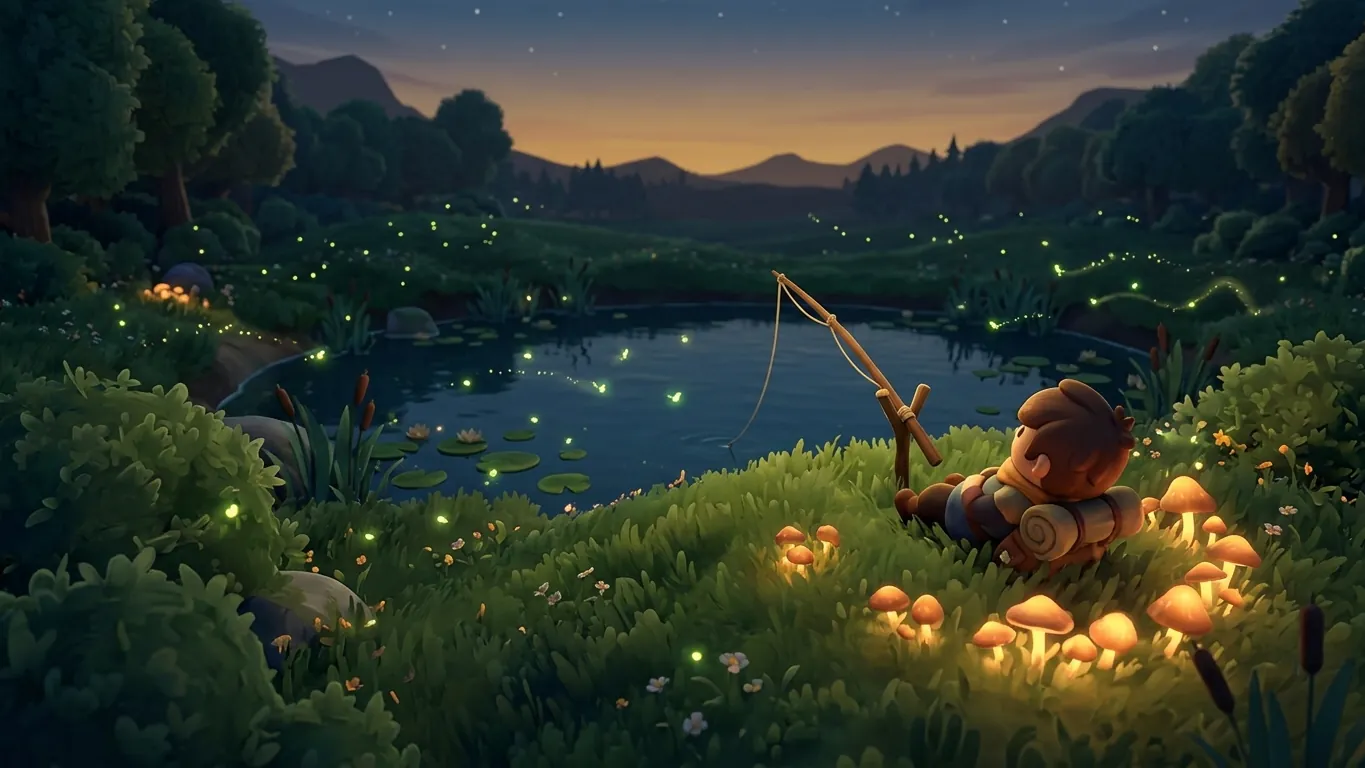 Why these quiet loops feel so good
An opinion piece on why slow game activities like fishing and mushroom farming feel calming, and which design choices make these loops enjoyable.
Read more