Catch zone bar
A fish icon moves up and down a vertical bar while you keep a moving zone over it. Staying on the fish fills a progress meter.
Fishing in games usually follows a simple loop of casting, waiting and reacting, but the details vary a lot. This guide explains the most common systems so you can recognize them in any game.
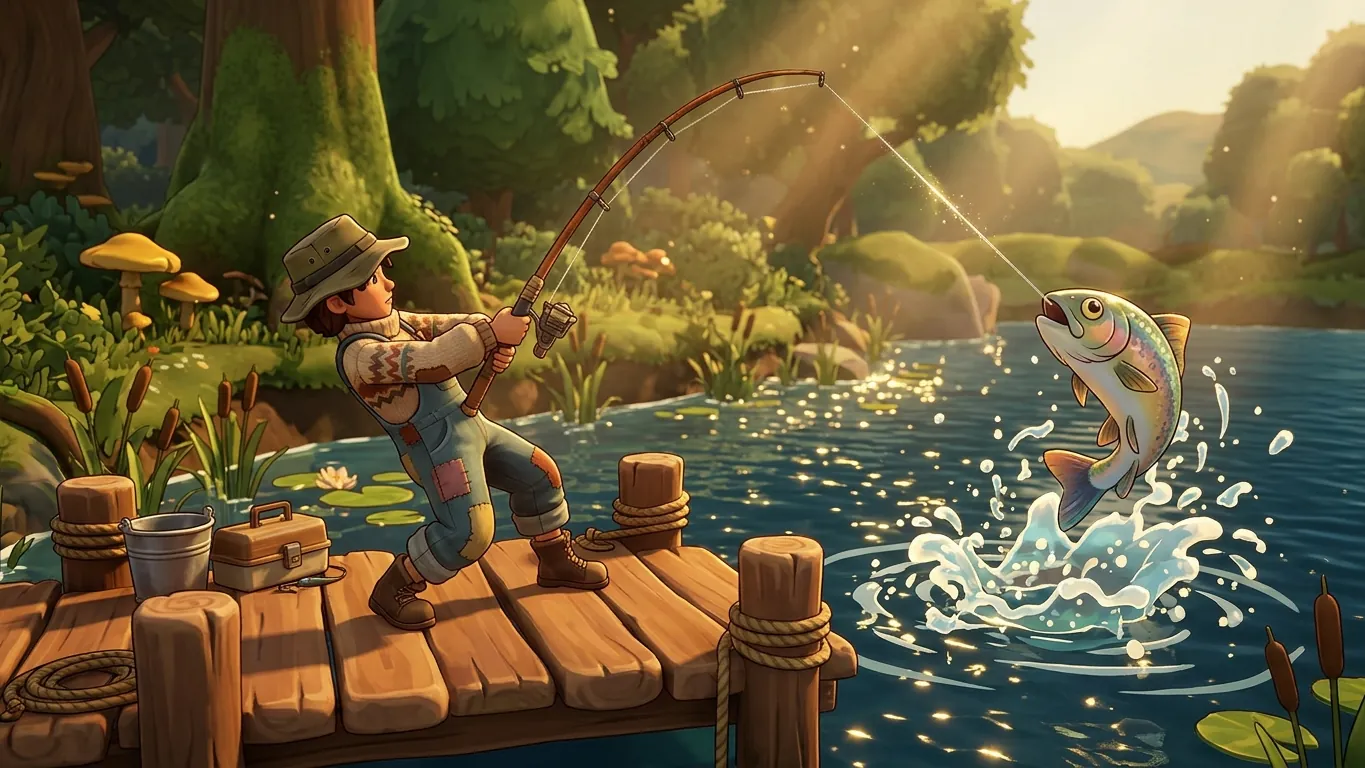
Almost every fishing system in a video game is built on three moments. First you cast, often by holding a button to charge distance and releasing at the right time. Then you wait while the bobber or lure sits in the water. Finally, something tugs at the line and you must react.
The waiting phase is more important than it looks. Games use it to build a little tension and to give you a moment to enjoy the scenery. Many signal a bite with several cues at once: the bobber dips, a splash sound plays, the controller may vibrate, and the character might lean forward. Learning to watch for the strongest cue in your game is the first skill worth practicing, because reacting too early often scares the fish away and reacting too late lets it slip off the hook.
Once a fish is hooked, games use different minigames to decide whether you land it. These are the styles you are most likely to meet.
A fish icon moves up and down a vertical bar while you keep a moving zone over it. Staying on the fish fills a progress meter.
You reel in while watching a line tension gauge. Too much pressure snaps the line, too little lets the fish escape.
Prompts appear in a rhythm and you press at the right moments, a bit like a short music game.
The fish swims left or right and you steer the rod in the opposite direction to tire it out.
Some relaxed games only ask you to react to the bite, then the catch happens without a minigame.
Games usually scale difficulty through the fish itself. Rare or large species tend to move faster, change direction more often or pull harder against the line. In a catch zone system, a difficult fish may dart across the bar in sudden bursts. In a tension system, it may thrash in waves that force you to ease off at the right times.
Location, time of day and weather can also matter, though mostly by deciding which fish appear rather than how hard they fight. Some games add stamina for your character, so long fights become tiring. Others reduce the time window for reacting to bites as you move into more advanced areas. If a particular fish feels impossible, it is often a sign that the game expects better equipment or more practice rather than perfect reflexes.
Rods, reels, lines, hooks, bait and lures are the usual ways a game lets your fishing improve over time. A better rod might widen the catch zone, a stronger line might tolerate more tension, and certain bait might attract specific species or speed up bites. Some games also include a fishing skill that rises with each catch and gradually makes the minigame more forgiving.
It helps to read item descriptions carefully, because similar sounding upgrades can do quite different things. One lure might increase the chance of rare fish, while another simply reduces waiting time. If your game offers both, choose based on your goal for the session: filling a collection, gathering ingredients for cooking or simply relaxing by the water.
Fishing minigames reward repetition, so short and frequent sessions often work better than long, tense ones. Start in an easy area where common fish are plentiful, focus on one skill at a time, and notice how the fish behaves before trying to control it. Many players find that watching the movement pattern for a second or two makes the rest of the fight much easier.
Check your game's settings as well. Some titles include accessibility options such as slower minigames, longer reaction windows, toggle instead of hold controls or visual bite indicators. These are there to make the activity enjoyable for more people, and using them is a perfectly valid way to play. Fishing in games is meant to be calm, and a relaxed pace usually produces better results than rushing.
 Mushroom farming basics
Learn the basics of mushroom farming in video games: logs, shaded beds, caves, growth cycles and the common factors that affect your in-game harvest.
Read more
 Fishing tips for new players
Practical fishing tips for beginners in cozy and farming games: choosing spots, timing, bait, inventory habits and keeping sessions relaxed.
Read more
 Designing a mushroom grow room
A guide to planning an in-game mushroom grow room or cave: layout ideas, walking paths, storage placement and scaling your setup step by step.
Read more